


📅 Upcoming Member Events
6/19: Dylan Zane - Velocity Capital Q/A session
6/23: Office Hours w/ Profluence team
7/1: Founders Fundraising Q&A session
🔗 Members can RSVP for events here
🎙 Podcasts
Mike Carney - CEO, OnDeck Partners
Andy Sandler - Partner, Temerity Capital

Hear from Mike on how they’re building their MCO model and how Andy’s family office is building a portfolio of sports team assets.
💬 New Members
Dan Cataldi - Groov
Emily Sciorra - NuCO2
Scott Ticer - Touchlynk
Jake Davidson - Corebball
Wesley Pabis - Augmento
Patrick Magee - Wii Stream
Andras Nemes - Future Stars
Philip Hover-Smoot - Atlas Cup
Ashley Preston - Athlete Chlabs
Krista Reinking - North Signalco
Brett Lyons - Commercial Leader
Kasim Al-Delaimy - Airena Sports
Matt Fleckenstein - Genius Sports
essica Walker - Mobile Ultrasound
Michael DiLorenzo - Fiumecapital
Aidan Byrne - Total Athletic Development
🔗 Connect directly with new members here.
🛠️ New Member Resource Added
We just added a list of U.S. women who are angel investors.

Now to today’s market briefing ⤵
The Death of Mom & Pop Ownership (in Sports)
Something unusual is happening in sports.
For over 100 years, minor league baseball teams were primarily owned by local families, entrepreneurs, or community operators.
Today, institutional capital is quietly rolling them up into multi-club ownership platforms.
It may seem like a niche trend.
I think it’s a preview of where the entire sports industry is heading.
Let’s Dive In 👇
The Quiet Roll-Up
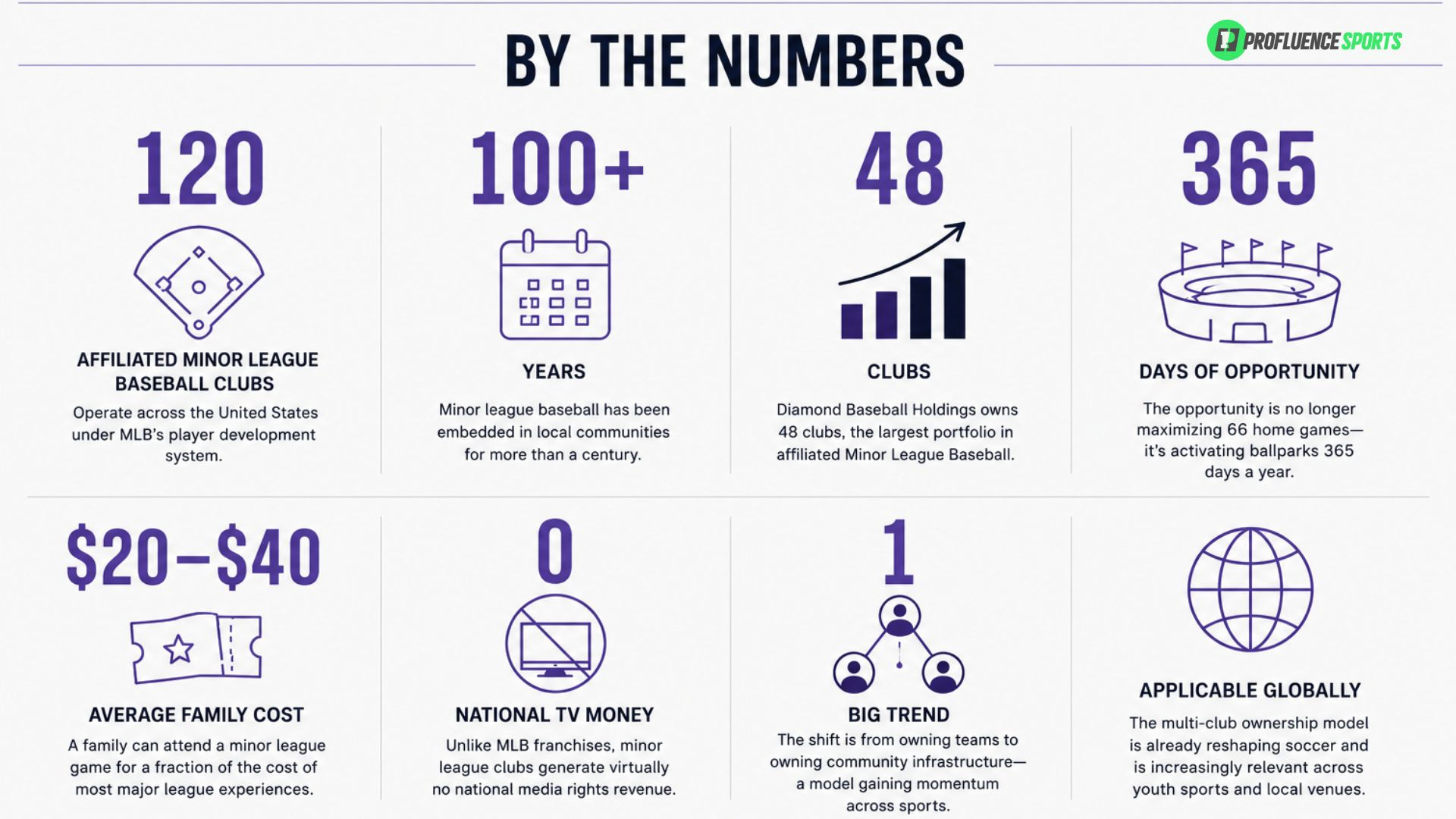
Minor League Baseball, with 120 affiliated clubs across the United States, has quietly become one of the most active consolidation stories in sports.
Multi-club ownership groups have begun consolidating teams under a single platform, bringing private equity playbooks and operational scale to one of America’s oldest sports ecosystems.
The biggest player is Diamond Baseball Holdings (DBH).
Backed by Endeavor and Silver Lake Capital, DBH has quietly acquired 48 affiliated clubs, making it by far the largest owner in Minor League Baseball.
Major League Baseball currently caps ownership at 50 affiliated teams, meaning the platform is already approaching the league’s ownership limit.
The thesis is straightforward: create scale through shared technology, sponsorship sales, ticketing systems, procurement, analytics, and operational best practices that can be deployed across dozens of organizations.
But DBH isn't the only group entering the space.
OnDeck Partners, launched by Marc Lasry & Avenue Sports, is taking a more measured, community-first approach.
Rather than assembling the largest possible portfolio, the company is focused on building a smaller collection of clubs while preserving local identity and investing in the ballpark as the center of community entertainment.
There’s also…
Prospector Baseball Group, backed by Arctos Partners, is building a modern baseball platform grounded in technology, operational expertise, and long-term ownership, while emphasizing local traditions and the fan experience.
Rather than pursuing sheer scale alone, the group has positioned itself around strengthening community-rooted franchises through smarter operations and strategic investment.
DBH, OnDeck Partners, and Prospector Baseball Group all represent the rise of multi-club ownership.
They simply have different visions for what the future of hometown sports should look like (one philosophy is primarily about operational scale, the others are about amplifying local connection, community gathering, and year-round venue activation).
Why Is This Happening?
The traditional answer seems to be that baseball is under-monetized.
But the real answer is more about:
Real estate.
Live entertainment.
Community infrastructure.
A ballpark in a smaller city becomes an anchor location:
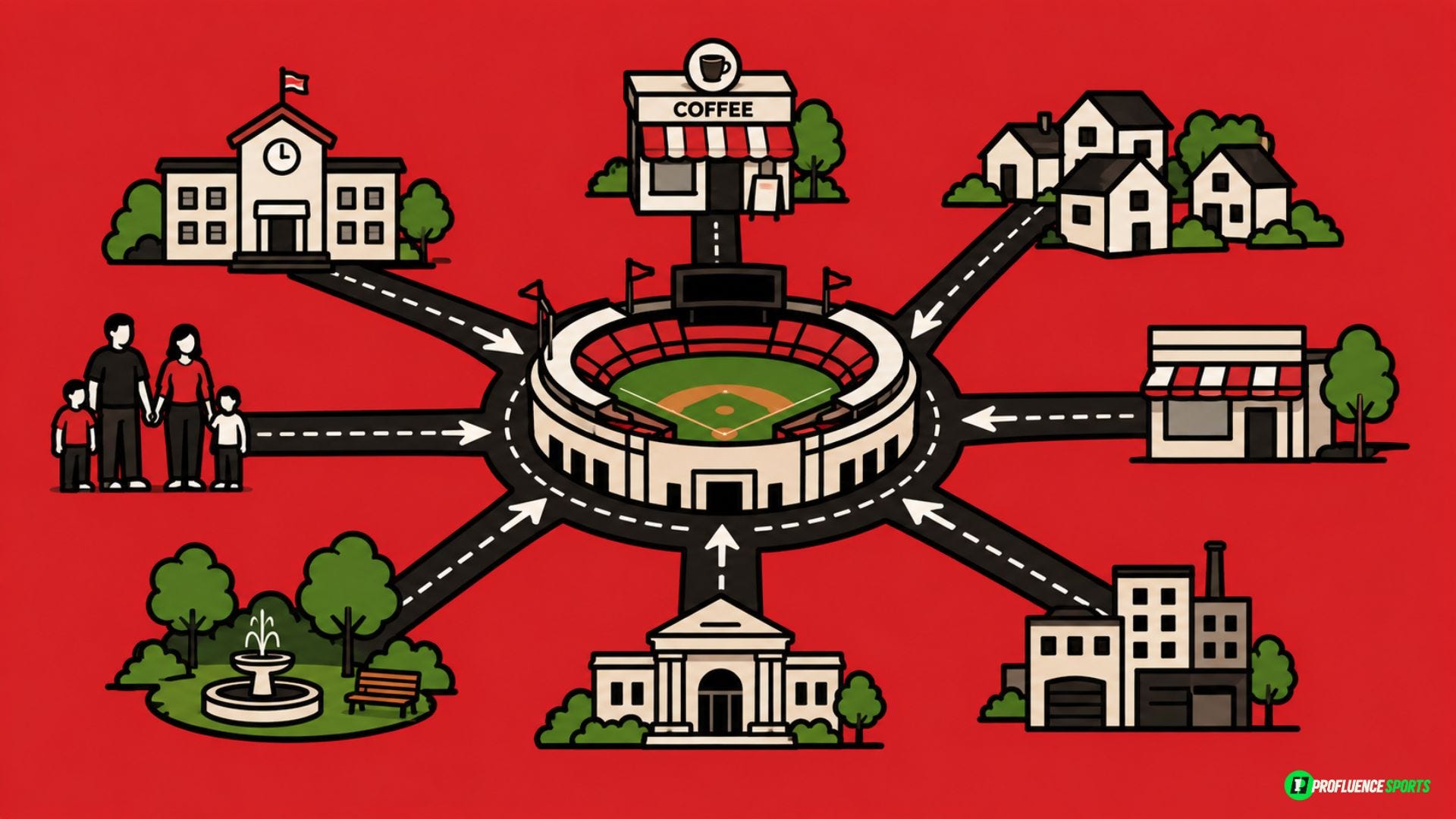
parking
hospitality
event space
concessions
premium suites
existing customers
corporate sponsors
local brand awareness
municipal relationships
Yet many are used only 60-70 nights each year.
That’s an incredibly underutilized asset, as a ballpark is already a complete entertainment district.
The MCO Flywheel
Multi-club ownership creates leverage across their shared services and best practices:
Data
CRM
AI tools
Marketing
Procurement
Sponsorship sales
Ticketing technology
Entertainment booking
Instead of 30 independent operators solving the same problems, one platform solves them once.
That’s why institutional capital likes these businesses.
We first explored this in a 2024 newsletter:

The Real Thesis Behind MCOs
The future of sports is about owning places where people gather.