


📅 Upcoming Member Events
4/17: Innovation in Golf Workshop
4/20-4/22: PEAK SportsTech event in Vegas
4/28: Office Hours w/ Profluence team
5/8: Founder’s Fundraising Session
5/15: Guest Speaker Benjamin Grubbs, Creator Sports Capital
🔗 Members can RSVP for events here
🎙 Podcasts
Christian Muche - CEO, POSSIBLE
Tom Porricelli - Partner, Citrin Cooperman
Hear from Tom about how they're entering sports and from Christian on their marketing event that has attracted top sports CMOs.

💬 New Members
Ben Chehebar - Eleven
Barry Sohl - iStat Sports
Brian Koenig - NEXXTUP
William Smith - Suave sports
Kevin McReynolds - Overnght
Season Skuro - Bubble Agency
Brent Kocher - Komo Technologies
🔗 Connect directly with new members here.
🛠️ New Member Resources Added

We just added a list of 2,500 angel investors.
Now to today’s market briefing 👇
The Sideline Economy in Sports
I haven’t been able to stop thinking about this concept.
In a recent Profluence Office Hours session, member Adam Halpern of WaveOn began discussing the “Sideline Economy” and how he’s weaving it into his positioning.
Everyone focuses on what happens on the field.
But one of the fastest-growing opportunities in sports is happening just off it (on the sidelines and in the infrastructure around them).
It’s worth a deeper dive, looking at some companies building in this arena, and more.
The Thesis
Here’s how I would define this massive, underbuilt layer of sports we’re calling the “Sideline Economy”:
The systems, services, and technology that support athletes before, during, and after competition.
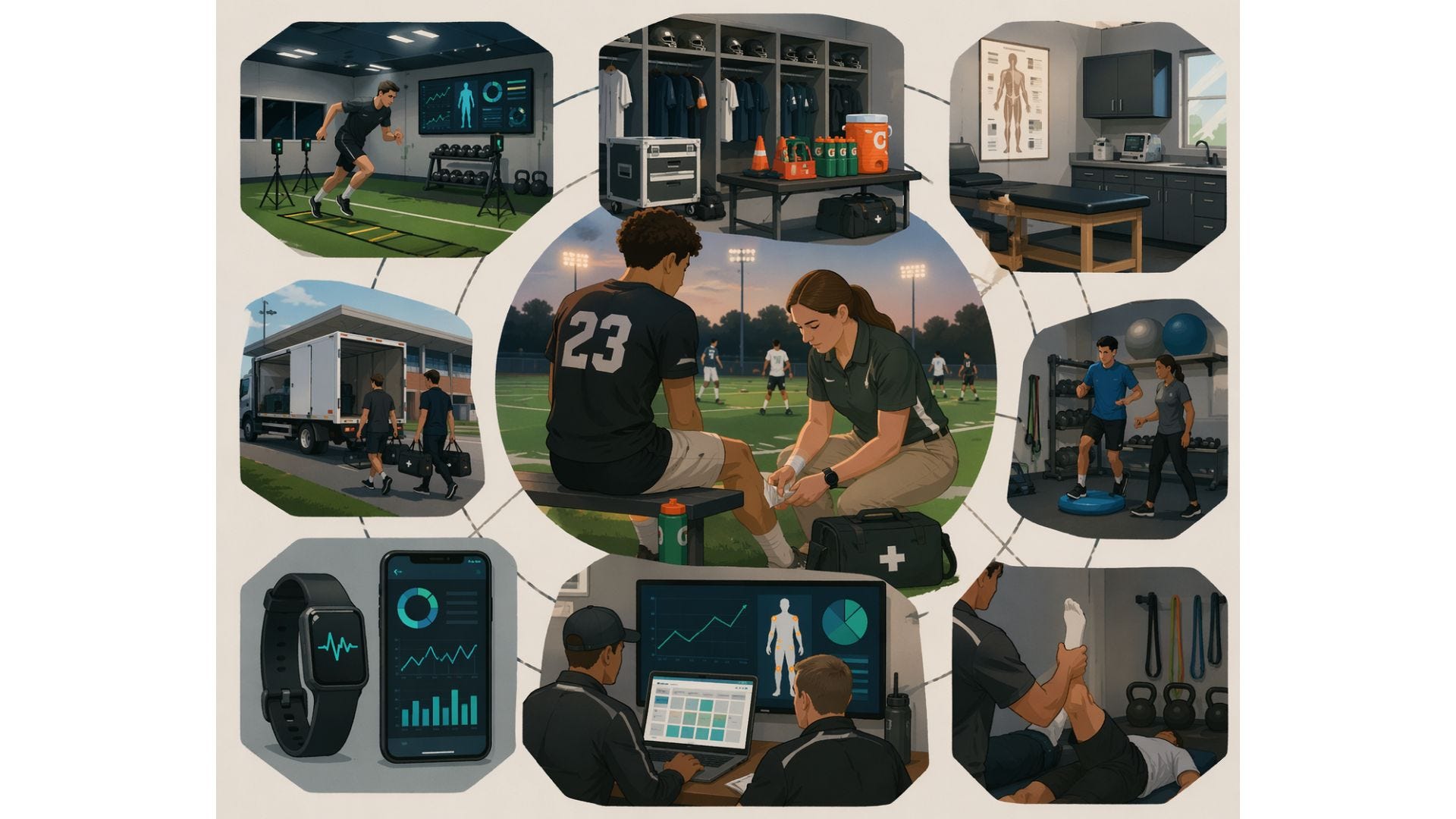
This could include:
Athletic trainers
Performance tracking
Equipment + logistics
Medical infrastructure
Injury prevention & rehab
Data + coordination platforms
And it’s scaling fast (especially as professionalization continues to flow downstream from the largest pro leagues to emerging IP, to college, to youth, and even to club).
I was on a call recently with a large asset manager who is very sophisticated in sports.
She said something that resonated with me:
I will always pay for my kids’ youth sports, because it’s just as much about getting them out of the house as it is about their development. It’s a form of babysitting; people just don’t like to think about it that way.
And that leads us to the key point.
Why Now
Three macro shifts are driving this:
1. More Athletes Than Ever
While participation dipped for a few years post-2020 (we all know why).
Youth, amateur, and recreational sports are exploding.
More participation = more injuries = more need for care
Athletic trainer demand is growing ~11% (faster than average)
Most of us can agree that participation will only increase as Gen Z and millennials are super active (and will pass it on to their kids as well).
They very much value sports/health activities, especially when they intertwine with community & social aspects.
2. Sports Is Becoming Healthcare
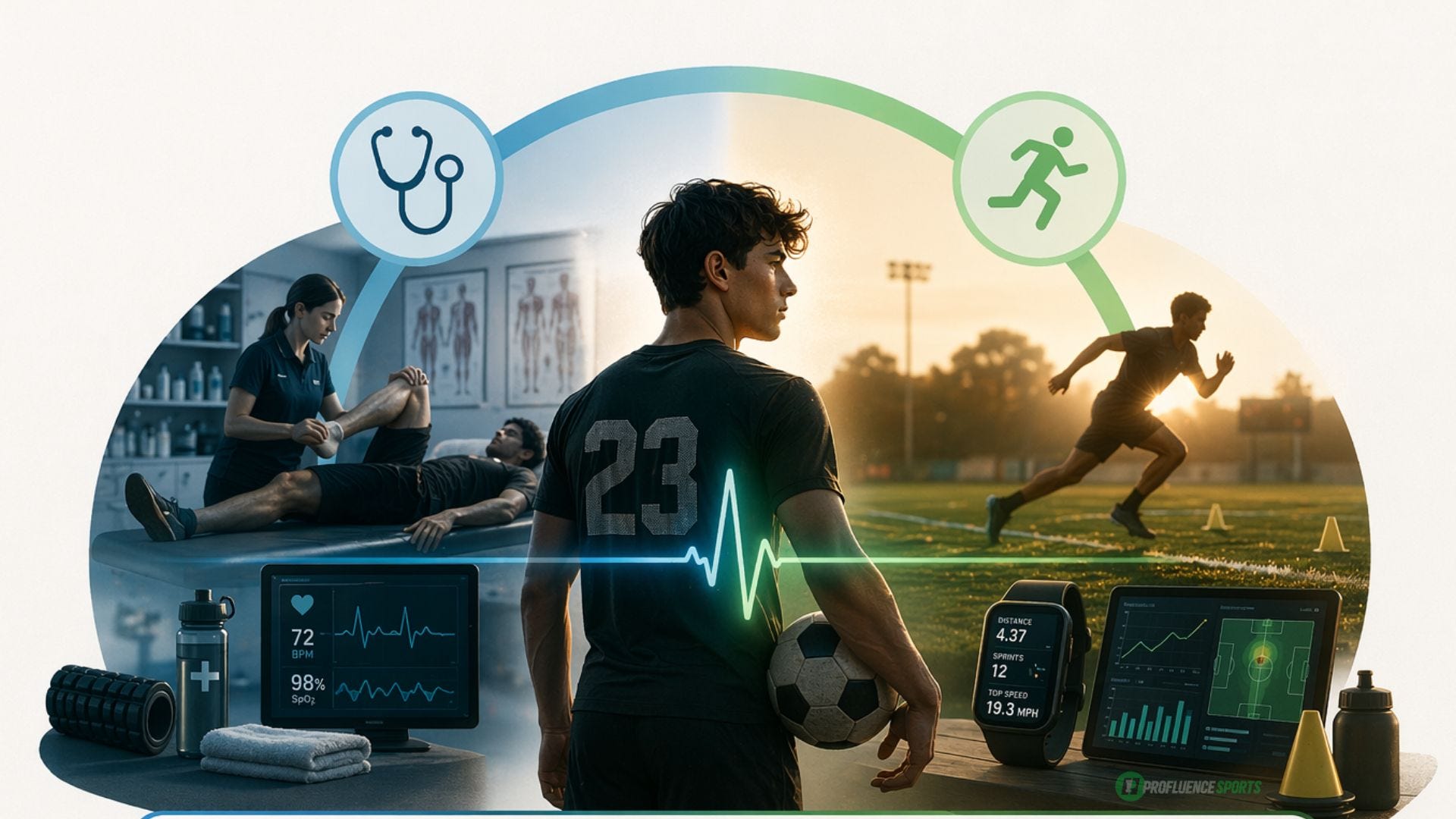
Athletic training is now a recognized healthcare profession focused on:
diagnosis
rehab
injury prevention
performance optimization
This is the key shift:
Sports has become a health + performance system.
Two examples that shed light on this:
A study found that Pickleball injuries, particularly among players over 50, are rising sharply, with roughly 87% to 90% of emergency room visits involving this demographic.
Enhanced Games (steroid version of the Olympics) is using sports as a Trojan Horse to develop, market, and ultimately sell performance enhancing supplements.
3. Technology Is Unlocking Scale
The sports tech market is exploding, with many studies projecting it to exceed $100B this decade.
What’s driving it:
Wearables
Injury tracking
Data platforms
Real-time analytics
Look at the recent announcement of WHOOP raising at a $10B valuation.
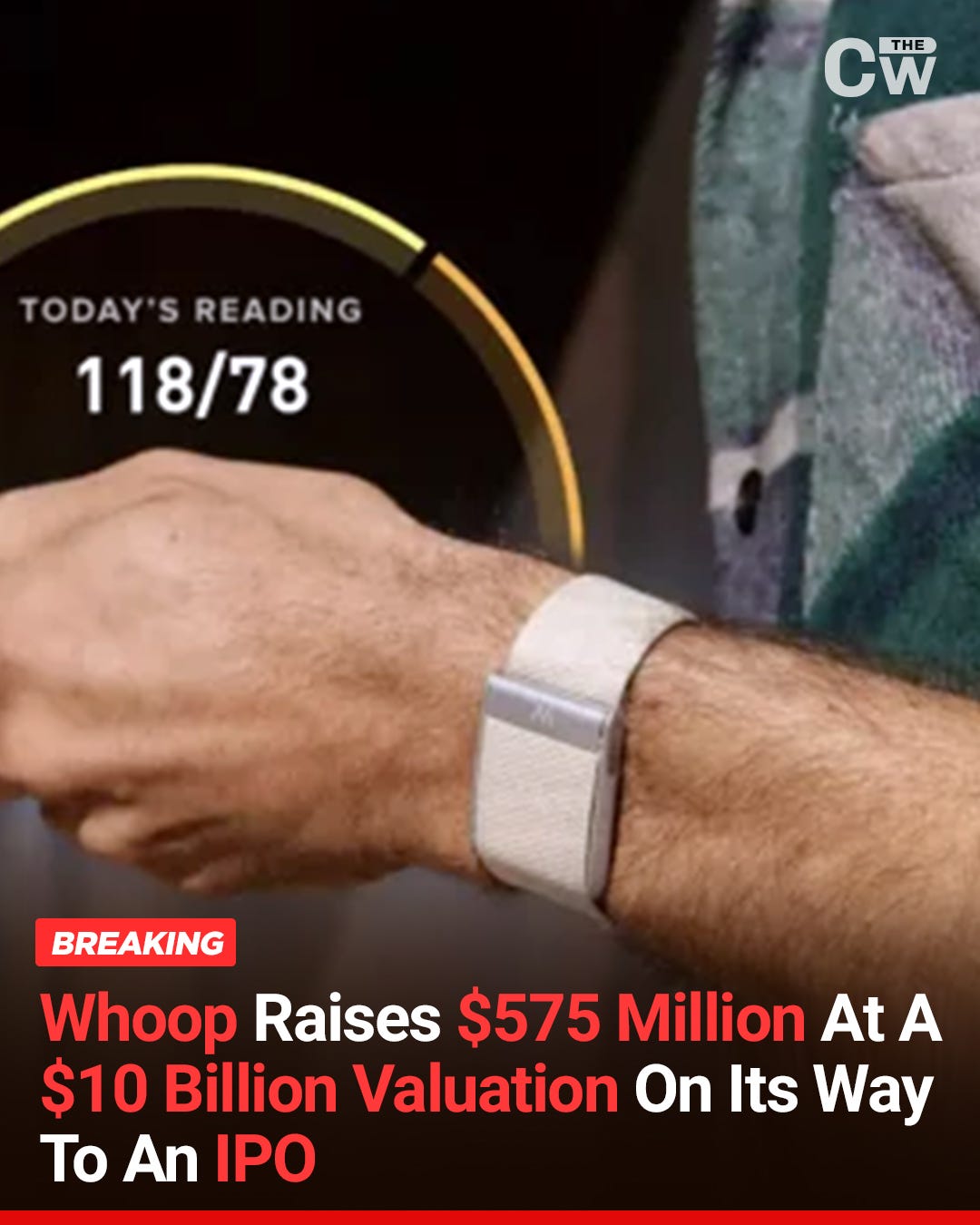
If you lump sports + health tech together, the market is massive.
This is enabling the “sideline economy” to move from manual/fragmented to a scalable digital solution.
Let’s take a look at one sub-example:
The Athletic-Health Sideline Economy
I think of this as…
The infrastructure connecting schools, trainers, and technology into a scalable model for athlete care.
Schools need coverage
Athletes need consistent care
Trainers need placement + tools
Data needs to flow across all of it
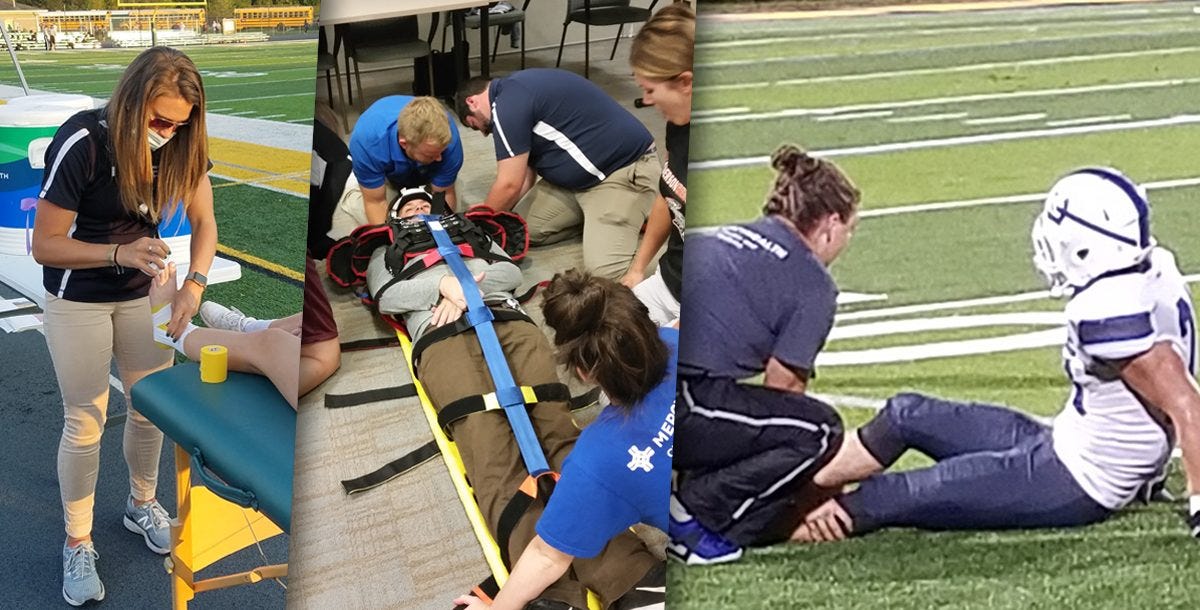
Right now?
It’s fragmented/broken, and for a few reasons:
Schools struggle to hire trainers
Trainers are underpaid/overworked
Data is siloed
Care is inconsistent
There isn’t a coherent operating system for athlete health (especially not spanning from youth to pro to recreational).
That’s the opportunity.
Companies Around This Space
A new wave of companies is starting to define this category:
Kitman Labs: Performance intelligence + injury risk analytics
Fusionetics: Movement assessment + injury prevention systems
Healthy Roster: Athlete medical records + communication platform
The Player’s Health: Insurance + safety + risk management infrastructure
Insurance providers like Xinsurance: Injury, liability, and participation risk
Around them, new categories are emerging, and market sizes are increasing, enabling participation by new entrants.
Where Opportunities Lie
If I’m looking to build a company in this space (or already am), I think these are categories to dig deeper into: